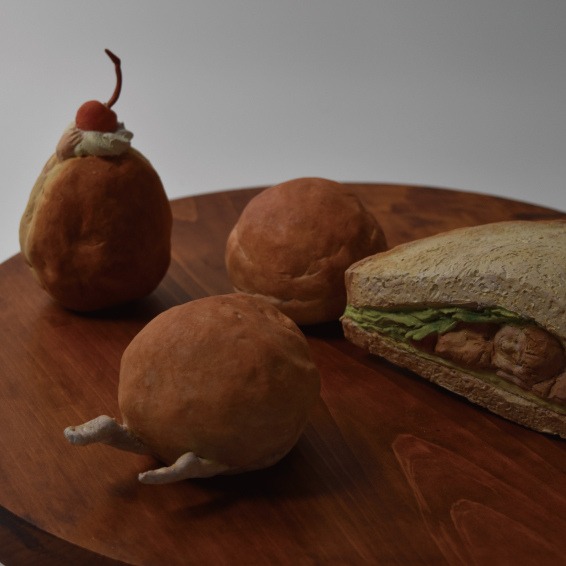
永江智尚
パン屋の3階でひきこもる
2026.5.30 (土) – 6.20 (土) / 水 – 日曜日 13:00 – 18:00
ギャラリープロジェクトDJURGARDEN は、2026 年5 月30 日(土)より、永江智尚「パン屋の3 階でひきこもる」を開催します。
◎会期 2026 年5 月30 日(土) - 6 月20 日(土)
◎開場 水 - 日曜日 13 時 - 18 時
◎会場 DJURGARDEN(都営大江戸線・都営新宿線 森下駅 徒歩5 分/ chigaya morishita 3 階)
永江智尚 TOMOHISA NAGAE
彫刻家。人や動物の自然な姿や、情感豊かなポーズを通して、生き物の本質を見つめた表現を追求。
アートとしての表現以外にも、モニュメントや肖像彫刻も手掛ける。日展など公募団体展を中心に発表。
~逃げる、隠れる、ひきこもる~
私たちは、ケガなどから逃れるために服を着て、外敵などから逃れるために建物内で過ごし、ウィルスなどから逃れるためにマスクをする。
これらの逃避行為は文化として日常化したことで、「逃げている自覚」を私たちから失わせ、「逃げる=ネガティブなイメージ」を定着させた。
しかし本来、逃げることは生存や文化発展に不可欠な要素であることは言うまでもない。
作品を通して、逃げることと人間らしさを結び付け、私たちらしさの本質である逃避為を問い直し、愛すべきものとして再定義する。
- 作家ステイトメントより
略歴
2004 年 筑波大学大学院 修士課程修了
2013 年 第89 回白日会展 白日賞、第38 回日彫展 日彫賞
2016 年 改組新第4回日展 特選
2022 年 第9 回日展 特選
2026 年現在 白日会 会員、日本彫刻会 会員、日展 準会員
死者の造形について(「感覚のエデン」を読んで)
ものの可塑性と柔軟性について、
現代資本主義のイデオロギーは、神経科学の知見を援用することで、「柔軟性」を人間の生物学的な本性であるかのように自然化する。
しかし、この操作は、真の「可塑性」が持つ抵抗と創造のポテンシャルを覆い隠してしまう。
我々は、自らを従順に適応させる「柔軟な」主体であることを強いられる一方で、既存の形を拒絶し、新たな形を創造する本来の「可塑性」の力を忘却させられている。
資本主義がこれほど効果的に柔軟性を自然化してしまったのであれば、真に抵抗的な主体性は、その生物学的・哲学的基盤をどこに見出すことができるのだろうか。
哲学者カトリーヌ・マラブー氏によると、それは「弁証法的な可塑性」によって可能であるという。
それは、「汝は汝のシナプスなり」という言明を否定するのではなく、その「である」という動詞の内実に、対立と変革の弁証法を読み込むことを要求する。
主体が可塑性を持つことは、別の生を生きること、すなわち、生まれ直すことができることを肯定することである。
いっぽう、岡崎乾二郎氏の議論においては、主体や客体といった単位ではなく、あらゆるものを可塑性をそなえた、プラスティックな可能性に開かれた、メディウム(媒体)としてとらえる視座を与えるものというところにある。
そこには、永江さんのステートメントにあるように文化が日常化したことによる「逃げている自覚」が喪失しているという指摘と、逃避行為を愛すべきものに再定義するという柔らかなまなざしがあるように思う。
- 企画 清水美樹
Gallery Project DJURGARDEN is pleased to present "Secluding Myself on the Third Floor of a Bakery," a solo exhibition by Tomohisa Nagae, opening on Saturday, May 30, 2026.
Exhibition Dates: Saturday, May 30 – Saturday, June 20, 2026
Opening Hours: Wednesday – Sunday, 1:00 PM – 6:00 PM
Venue: DJURGARDEN (5-minute walk from Morishita Station on the Toei Oedo and Shinjuku Lines / 3rd floor of chigaya morishita)
Tomohisa Nagae
**Tomohisa Nagae is a sculptor who explores the essence of living beings through naturalistic depictions and emotionally resonant poses of humans and animals. In addition to his artistic practice, he also creates public monuments and portrait sculptures. He primarily exhibits his work in major juried exhibitions in Japan, including the Japan Fine Arts Exhibition
the Nitten Exhibition. the Japan Fine Arts Exhibition**
~To Flee, To Hide, To Withdraw~
We wear clothes to protect ourselves from injury, stay indoors to shelter from external threats, and wear masks to shield ourselves from viruses.
These acts of evasion have become so ingrained in our culture as everyday practices that we have lost our awareness of them as "fleeing." This has, in turn, solidified the negative image associated with the act of escape.
However, it is undeniable that fleeing is, in fact, an essential element for both survival and cultural development.
Through my work, I connect the act of fleeing with what it means to be human. I seek to re-examine these acts of evasion—so fundamental to our nature—and redefine them as something to be cherished.
– From the Artist's Statement
Biography
2004: Completed his Master’s degree at the Graduate School of the University of Tsukuba
2013: Hakujitsu Award, the 89th Hakujitsukai Exhibition; Nicho Award, the 38th Niccho Exhibition
2016: Special Selection, The 4th Nitten Exhibition (Reorganized)
2022: Special Selection, The 9th Nitten Exhibition
Present: Member of the Hakujitsukai, the Japan Sculpture Society, and an associate member of the Nitten.
On the Plasticity of the Dead (A Reading of Eden of the Senses)
On the plasticity and flexibility of things:
The ideology of modern capitalism, drawing on insights from neuroscience, naturalizes "flexibility" as a biological human trait. However, this maneuver obscures the potential for resistance and creation inherent in true "plasticity."We are compelled to be "flexible" subjects who docilely adapt, while being made to forget the original power of "plasticity"—the power to reject existing forms and create new ones.
If capitalism has so effectively naturalized flexibility, where can a truly resistant subjectivity find its biological and philosophical foundation? According to the philosopher Catherine Malabou, this is made possible through "dialectical plasticity." This does not negate the statement "You are your synapses," but rather demands that we read into the very verb "are" a dialectic of opposition and transformation. For a subject to possess plasticity is to affirm the possibility of living another life—in other words, the capacity to be born anew.
Meanwhile, the discourse of Kenjiro Okazaki offers a perspective that views not subjects or objects as discrete units, but rather sees everything as a medium endowed with plasticity and open to plastic possibilities.
Here, I find a resonance with Nagae's statement: his observation of the loss of our "awareness of fleeing" as these acts become culturally routine, and his gentle gaze that seeks to redefine these acts of evasion as something to be cherished.
Miki Shimizu, Curator
← Exhibition 一覧へ